
 SMILE SPORTS
What we do
Fun sports camps
for neighborhood kids
Four hours, six stations, sixty children, in a neighborhood gym near you.
We use sports to make oral health education fun for children.
How a camp is laid out
Six teams, different colors, a number on the back
Color plus number is how we run the day, and how we track the quiz data without a child’s name in the results. Coaches and teachers use the team colors and numbers to build games and contests all afternoon.
A typical camp day
How the day runs
- 11:45Registration and free shoot
- 12:00Welcome, team lines, stretch
- 12:30Session I: three zones
- 1:45Snack, break and a guest
- 2:05Session II: new partners
- 3:20Camp contest, photos, gift bags
- 3:50Pickup, signed out by name
Times change a little from camp to camp.
The six stations
Four sport stations
Basketball, soccer, baseball, whatever the gym and the coaches do best. Skills in the first session, games in the second.
The Smile Zone
Sugar cubes against a bottle of sports drink, a flossing race, a two-minute song, a shoelace you should never floss with, and a quiz before and after.
The wellness station
Nutrition, hydration, eating well, and a few quiet minutes of mindfulness in a very loud afternoon.
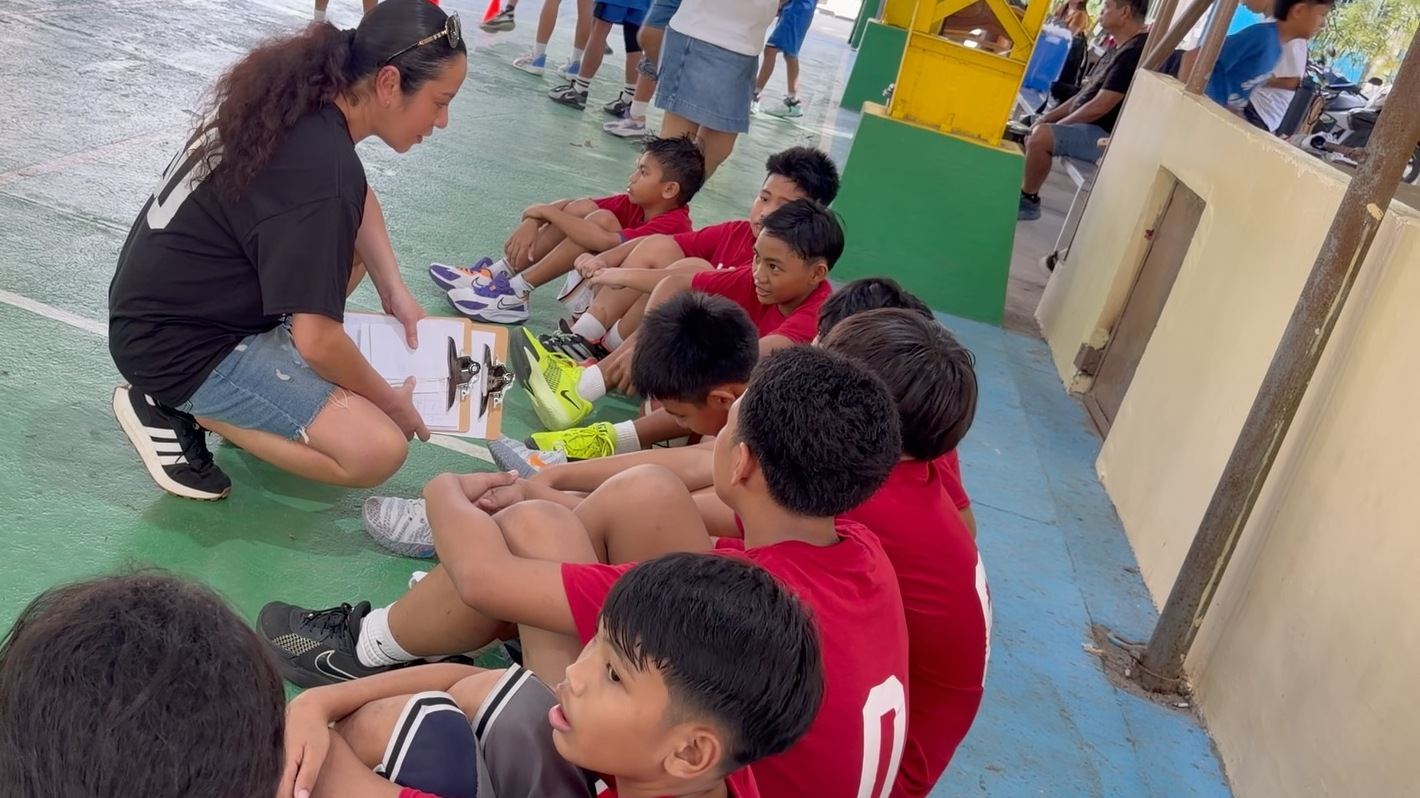
Dr. Ethel Alfaro teaching the Smile Zone, Pampanga.
Who is at camp
| Role | How many | What they do |
|---|---|---|
| Sport coaches | 4 | Run a sport station all afternoon. They never move, the children do. |
| Oral health lead | 1 | A dentist, hygienist or a trained adult working from our written curriculum. |
| Wellness lead | 1 | Nutrition, hydration and mindfulness. |
| Team counselors | 6 | Walk with a team all day, keep the count, help at every station. |
| Camp lead, check-in, floater | 3 | The door, the roster, the first-aid kit and anything that goes sideways. |
| Surprise guest | 1 | Someone the children look up to, who drops in at the snack break to talk, play and cheer them on. |
Girls and boys, the same camp
Girls are half the reason this works. They come, they compete, and in most of the neighborhoods we work in they have fewer free places to play than their brothers do.
So our camps are mixed by default. Teams are drawn with girls and boys together, and every station, from the four sport stations to the oral health station, runs the same way for everyone.
Who is actually in the gym
Keeping children safe
Names go only where they are needed
The registration file, the check-in table and the counselor’s roster.
Every adult is screened
Background checks, a signed safeguarding acknowledgement and training before a camp. Smile Sports pays for the checks.
Two-adult rule
No adult is ever alone with a child. Stations are open, visible and staffed by at least two people.
Sign-out by name
A child is released only to a parent or guardian, or to the pick-up adult named on their registration form.
Community Collaboration
Want to help?